Bella’s Lamb Ribs
If you are missing the rich, fall-off-the-bone comfort of slow-cooked barbecue, lamb ribs—often called lamb breast or ribs—are an absolute dream. Lamb ribs are naturally marbled with a thick layer of rich fat and sweet, tender meat that transforms into pure heaven when cooked low and slow. The biggest mistake people make with lamb ribs is rushing them; if cooked too quickly over high heat, they can end up tough and chewy.
The secret to achieving that buttery, melt-in-your-mouth texture is a two-step cooking technique: a slow roast wrapped tight in foil to tenderize the meat, followed by a high-heat blast to render and crisp up the outer fat. By rendering out the natural fats and crisping the edges with just a touch of sea salt, you get a deeply satisfying, zero-carb finger food that rivals any traditional rack of pork ribs. They take a bit of patience, but the moment you take that crisp, tender bite, you will know it was completely worth the wait.
Rich, “bacon-like,” and decadently fatty, Bella’s Lamb Ribs (often called lamb breast or lamb flaps) are a hidden gem for the dedicated carnivore. Because lamb ribs are smaller and higher in fat-to-meat ratio than pork or beef ribs, they render down into a crispy, melt-in-your-mouth treat that satisfies even the most intense fat cravings. By using a slow-cook-then-sear method, you transform a traditionally tough cut into a savory delicacy with a perfect “snap.”
Why are lamb ribs often called “Lamb Bacon”? When sliced thin and cooked until the fat is fully rendered and crispy, lamb ribs have a texture and flavor profile remarkably similar to thick-cut bacon. The layers of fat and meat are perfectly proportioned to provide a salty, savory crunch in every bite.
Should I remove the silver skin/membrane? Yes. Just like with pork ribs, there is often a tough membrane on the bone side. For the best experience, use a butter knife to lift the edge and a paper towel to grip and peel it off. This allows the heat to reach the fat more directly, ensuring a better render.
What is the best way to cook them for maximum crispiness? A “low and slow” start followed by a “hot and fast” finish is the secret.
- Oven: Bake at 300°F for 1.5 to 2 hours (wrapped in foil to tenderize).
- Air Fryer: Air fry at 320°F for 20 minutes to tenderize, then crank it to 400°F for 5–8 minutes to “flash-fry” the fat until it’s golden and bubbling.
Do they need a lot of seasoning? Lamb has a naturally robust, earthy flavor that stands well on its own. A generous coating of coarse sea salt is often all you need. The salt helps draw out surface moisture, which is essential for getting that signature “bacon” crunch.
How do I handle the high fat content while cooking? Lamb ribs release a lot of liquid gold (rendered fat). If using an oven, cook them on a wire rack over a baking sheet so they don’t boil in their own fat. If using an air fryer, be prepared to drain the basket halfway through to prevent smoking. Save that rendered lamb tallow—it’s excellent for searing steaks later!
How do I know when they are finished? The ribs are done when the meat has visibly pulled back from the ends of the bones (at least half an inch) and the fat cap is golden-brown and firm to the touch, not squishy.
Do you prefer to eat these as a “rack” that you gnaw off the bone, or do you like to slice them into individual “lamb bacon” strips before the final crisping?
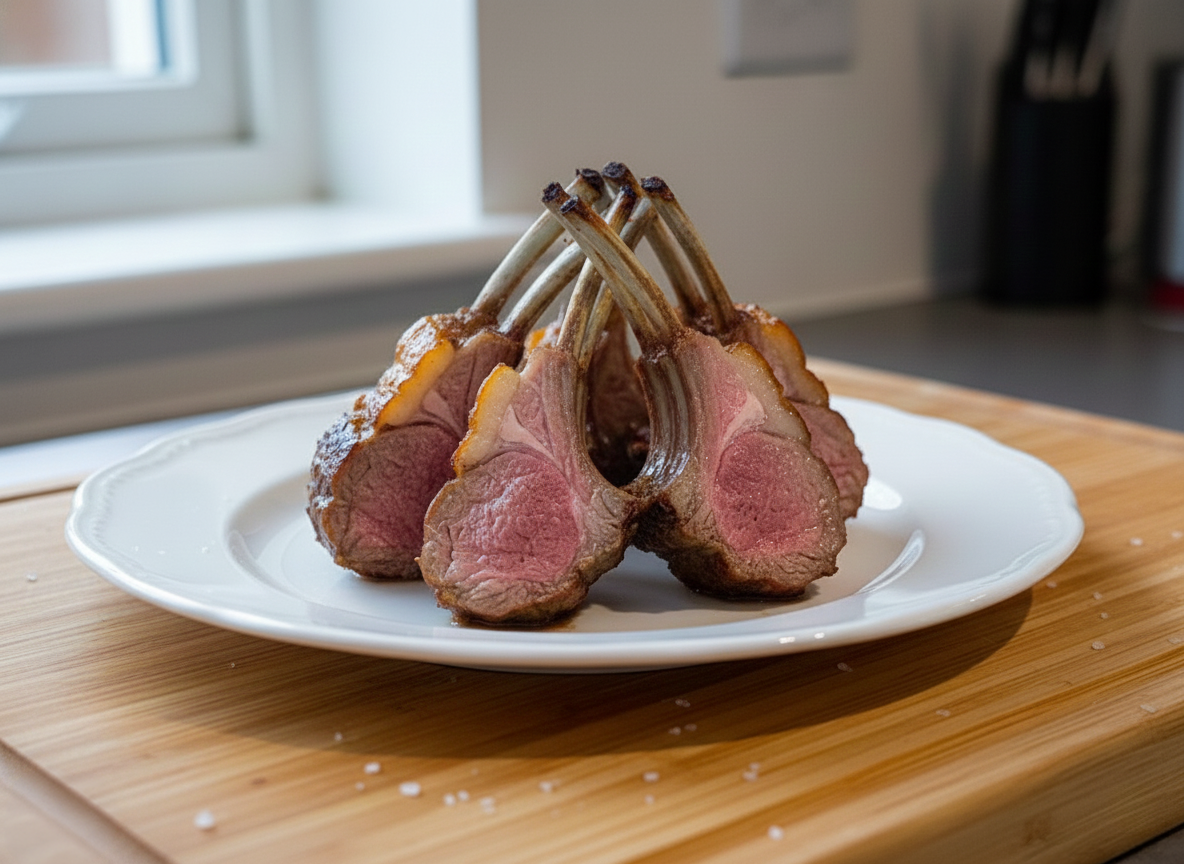
Bella’s Lamb Ribs
Ingredients
- 1 rack lamb ribs
- Salt and seasonings to taste (optional)
Instructions
- Preheat your oven to 250°F. Line a large, rimmed baking sheet with parchment paper to catch the rendered fat and ensure easy cleanup.
- Pat the rack of lamb ribs dry with paper towels. Season both sides of the rack generously with salt or your choice of spices, pressing the seasoning into the fat cap.
- Place the ribs on the prepared baking sheet, bone-side down. Bake in the center of the oven for 2 hours. At this temperature, the fat will slowly render, and the meat will become tender and pull away slightly from the ends of the bones.
- Once the 2-hour roast is complete, remove the baking sheet from the oven. For a crispy finish, switch your oven to the high broil setting.
- Place the ribs back into the oven under the broiler for 5 minutes. Watch them closely, as the high fat content can cause them to crisp up very quickly; remove them once the surface is bubbly and deeply golden brown.
- Alternatively, you may choose to sear the ribs in a hot cast-iron skillet over medium-high heat for 1 to 2 minutes per side to achieve a traditional pan-seared crust.
- Allow the ribs to rest for 5 minutes before slicing between the bones. Serve warm. Leftovers can be stored in an airtight container in the refrigerator for up to 4 days and are best reheated in an air fryer or oven to maintain their crispy texture.
